Press kit · Nonfiction · Philosophy & cultural commentary
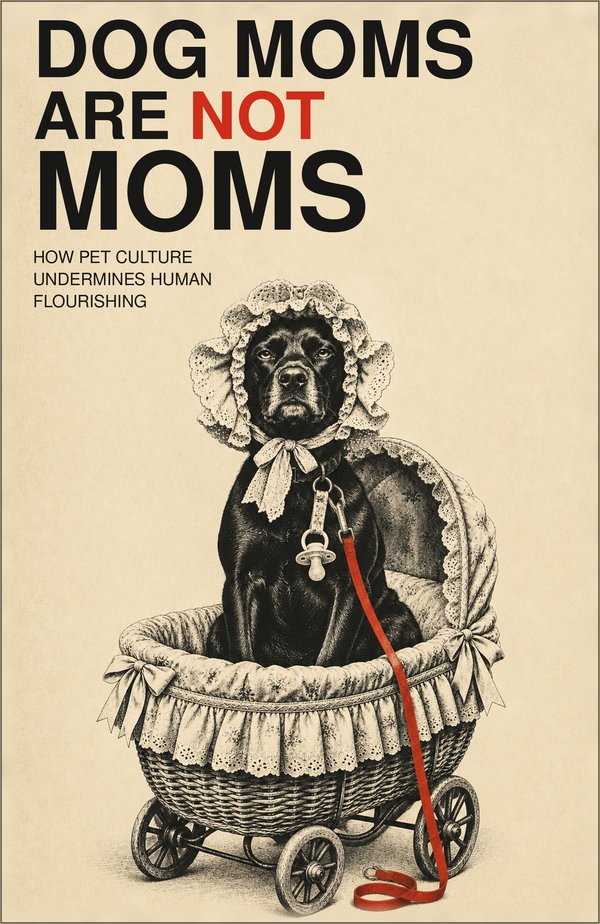
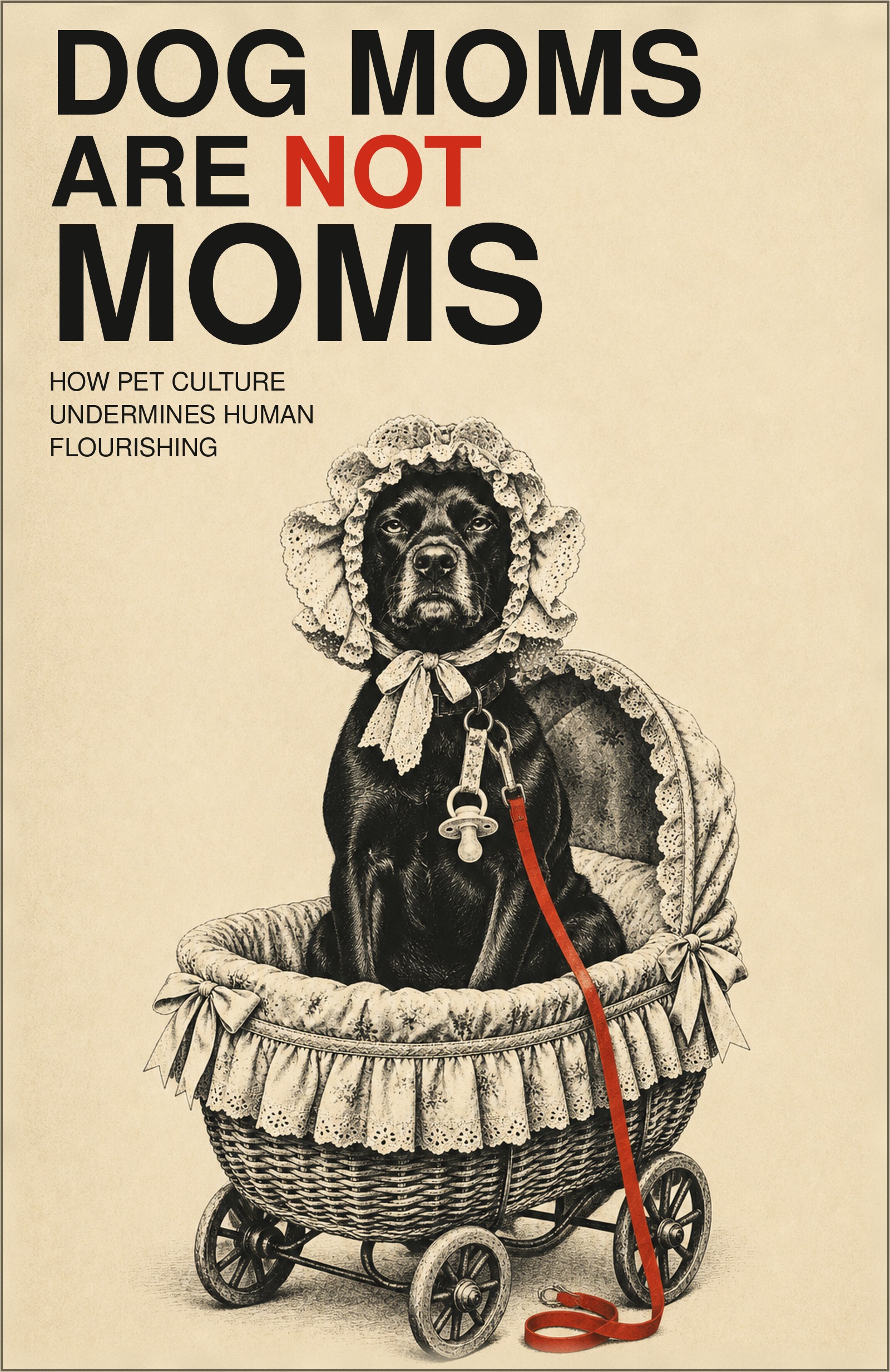
Dog Moms Are Not Moms
How Pet Culture Undermines Human Flourishing
Finally, someone questioning pet culture: a dog owner’s case that caring for an animal and raising a person are not the same thing. And no, it isn’t anti-dog.
Paperback & Kindle · 118 pages · about 44,000 words · Published 2026 · ISBN-13 979-8193402619
About the book
Is a dog mom a mom? This book says no, and it explains why.
Dog Moms Are Not Moms argues that calling pet care “motherhood” blurs a real moral line between caring for an animal and raising a person. On the book’s account, motherhood forms a human moral agent; pet ownership is the guardianship of a nonhuman dependent. Love for an animal can be real and deep without making the two relationships the same.
It is a short work of philosophy and policy that draws on moral philosophy, economics and public policy. It looks at the language of “pet parenthood,” the costs pet culture places on other people, the industry that profits from it, and the difference between working dogs and companion animals. It closes with a ladder of ideas that runs from cultural argument up to policy. Along the way it devotes whole sections to the strongest objections to its own case.
It is provocative, and we expect many readers to disagree. The gap between what the title provokes and what the book actually argues is where the conversation gets interesting.
Why it matters · talking points for hosts & reviewers
Judge the argument, not just the title.
Pet culture rarely gets questioned in public. This book questions it, carefully. It suits a debate segment, a “steelman both sides” episode, or hosts who disagree with each other.
Words carry claims
“Dog mom” can express affection, the book says, but it can’t establish identity. What is lost when one title covers two very different relationships?
The Crate Test
Leaving a dog crated for three hours is not like leaving a toddler alone. The book names five differences: the object of care, the aim, authority, the terms of exit, and the relationship’s place in social succession.
Moral agency and the hard cases
The book ties human priority to moral agency, then faces the hardest objections head-on: infants, people with profound disabilities, people with dementia. It also engages Peter Singer and care ethics.
Animals still count
Animals are “moral patients” whose suffering matters. The book also asks why we treat pets and farm animals so differently.
Who pays?
Some costs land on people who don’t own pets: bites, shelters, disputes over emotional support animals, and effects on the environment and wildlife.
“Big Pet”
Is the “pet parent” identity built by the market, a cultural drift, or a response to loneliness, housing costs and delayed family life? The book gives the strongest counter-explanation a hearing.
Working dogs vs. “lazy” dogs
A deliberately provocative line: trained, verifiable work that benefits people beyond companionship, versus companionship alone.
The policy ladder
It starts with persuasion and only later reaches measures like a German-style dog tax, permits and breeding rules, with a section warning how such rules could fall hardest on some groups.
- Is “dog mom” a harmless analogy or a real claim?
- Can you love an animal deeply and still say it isn’t your child?
- Which objection to the book is strongest, and does it answer it?
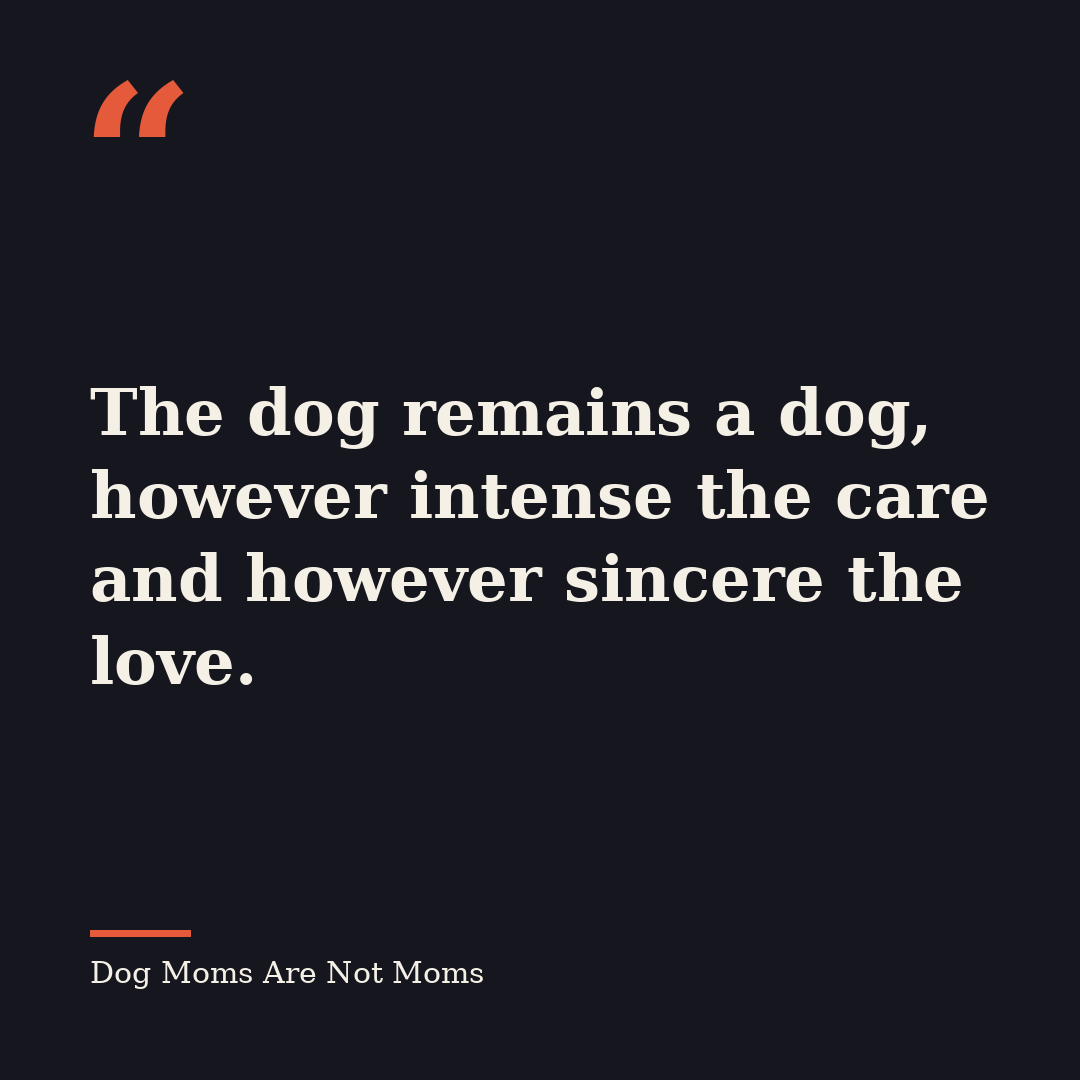
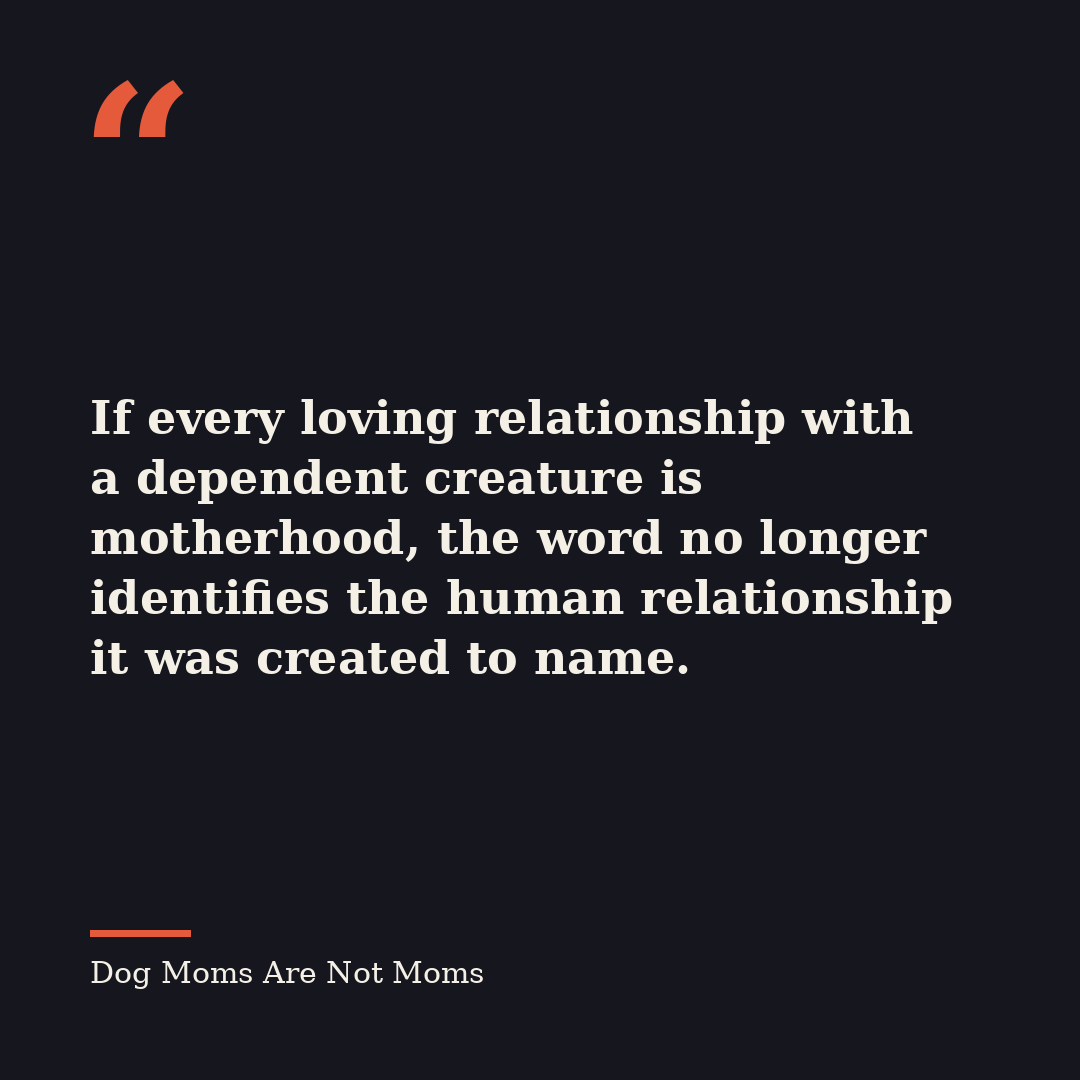
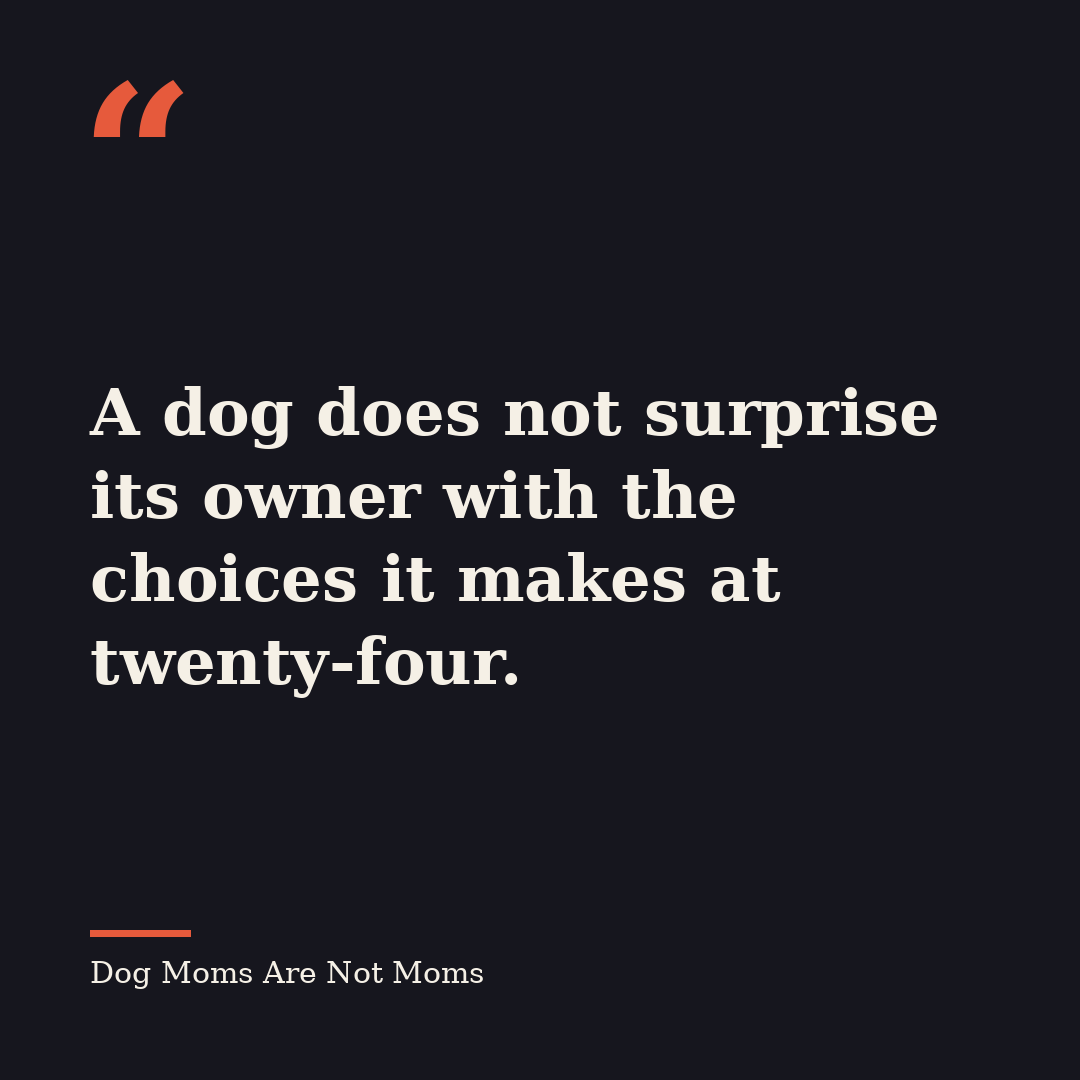
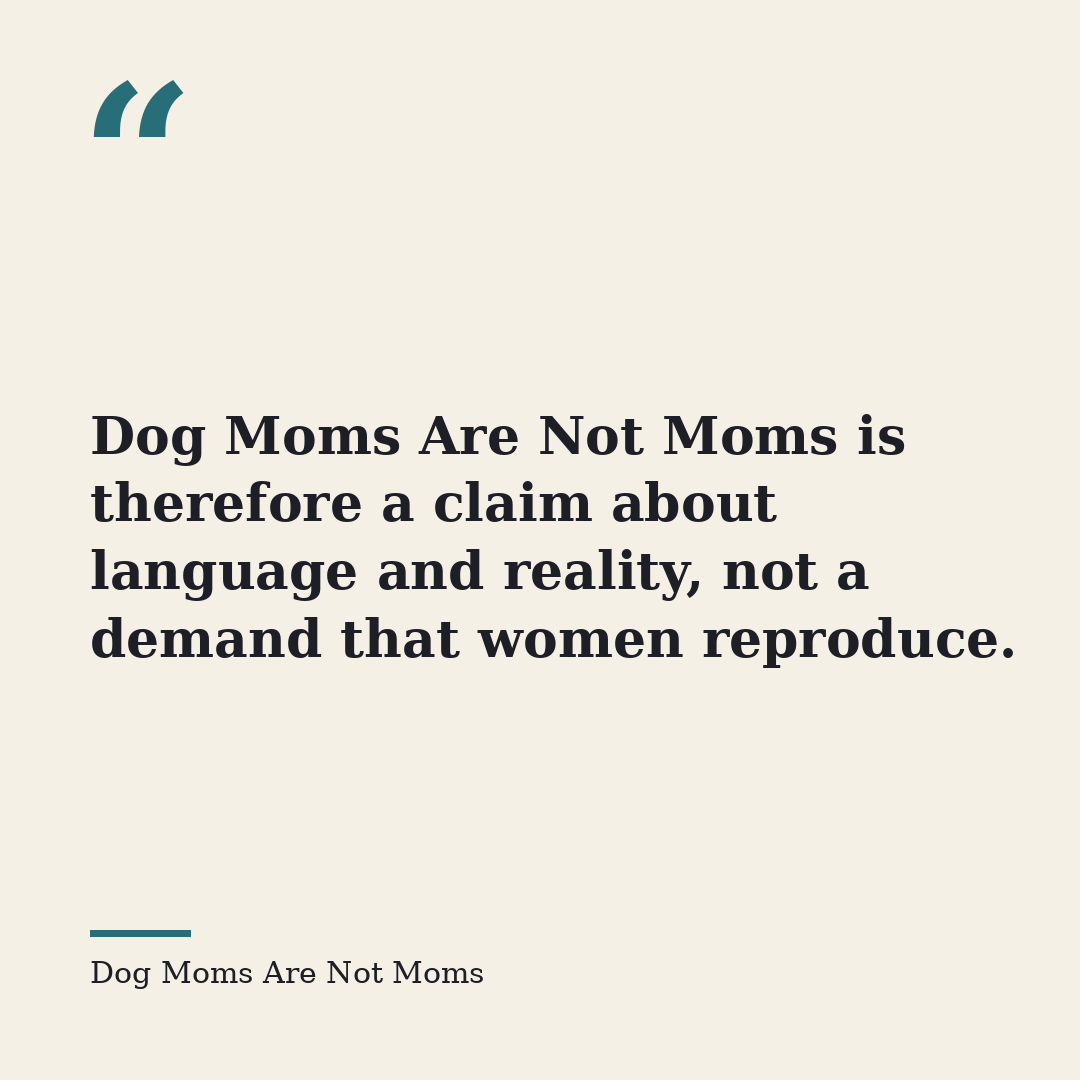
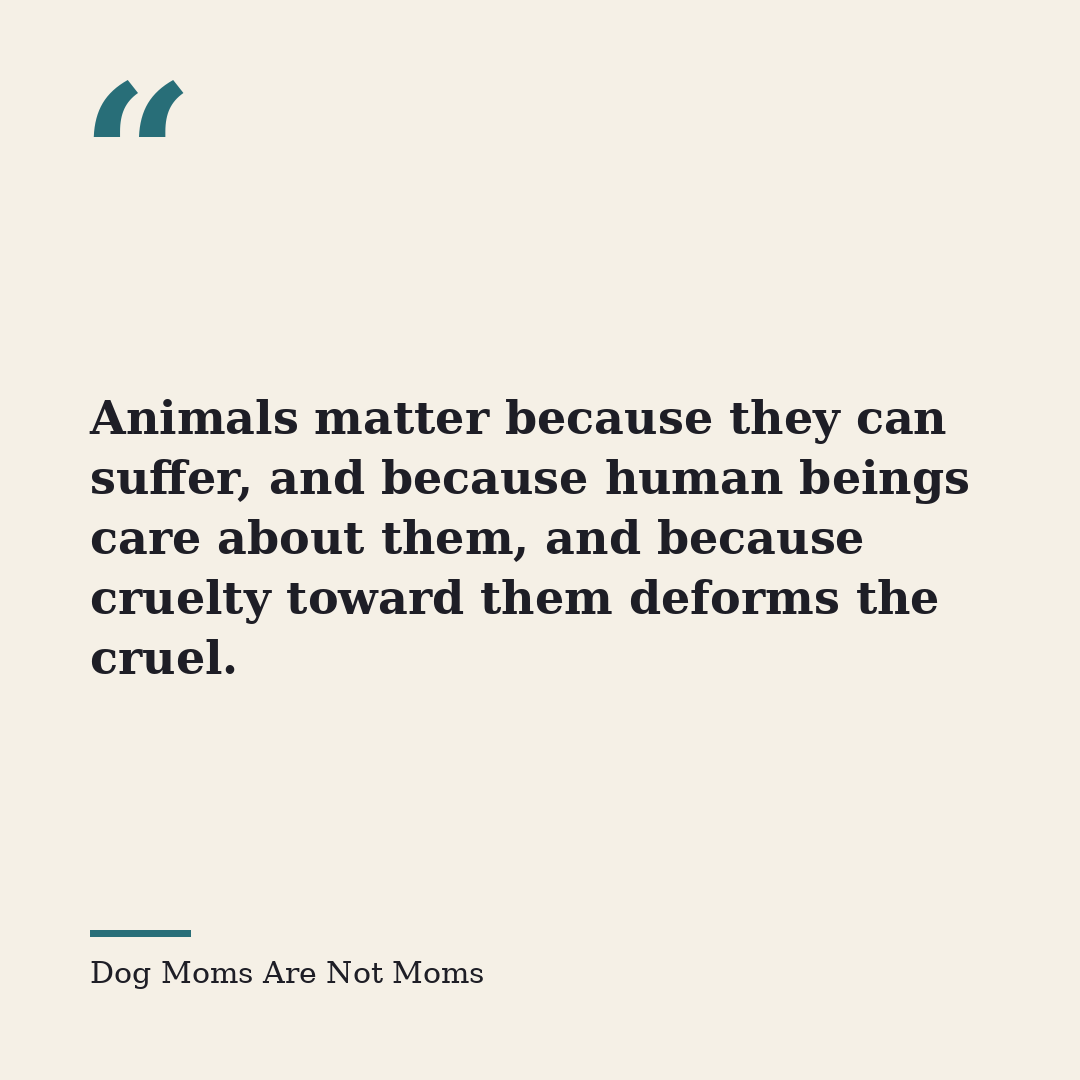
Quote cards
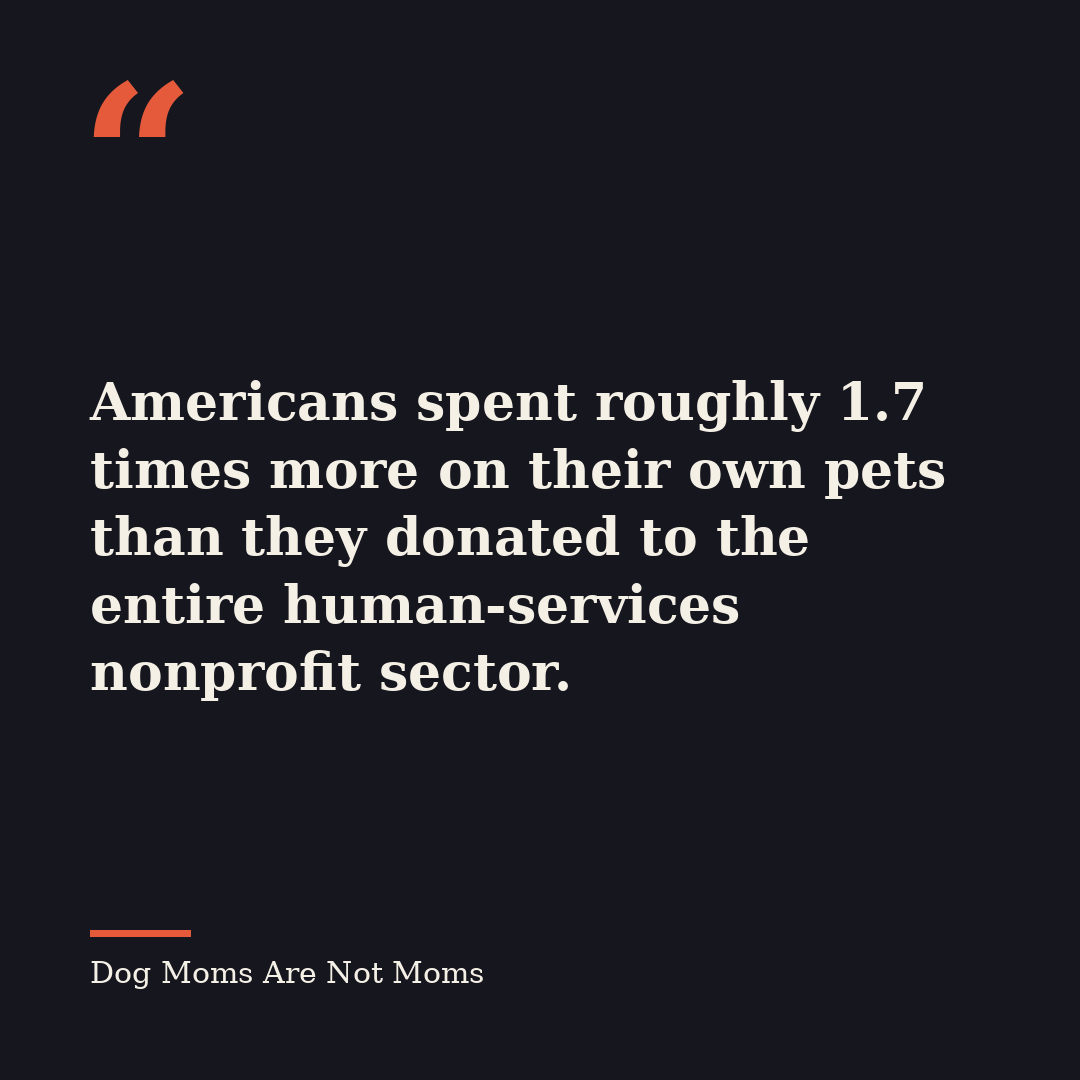
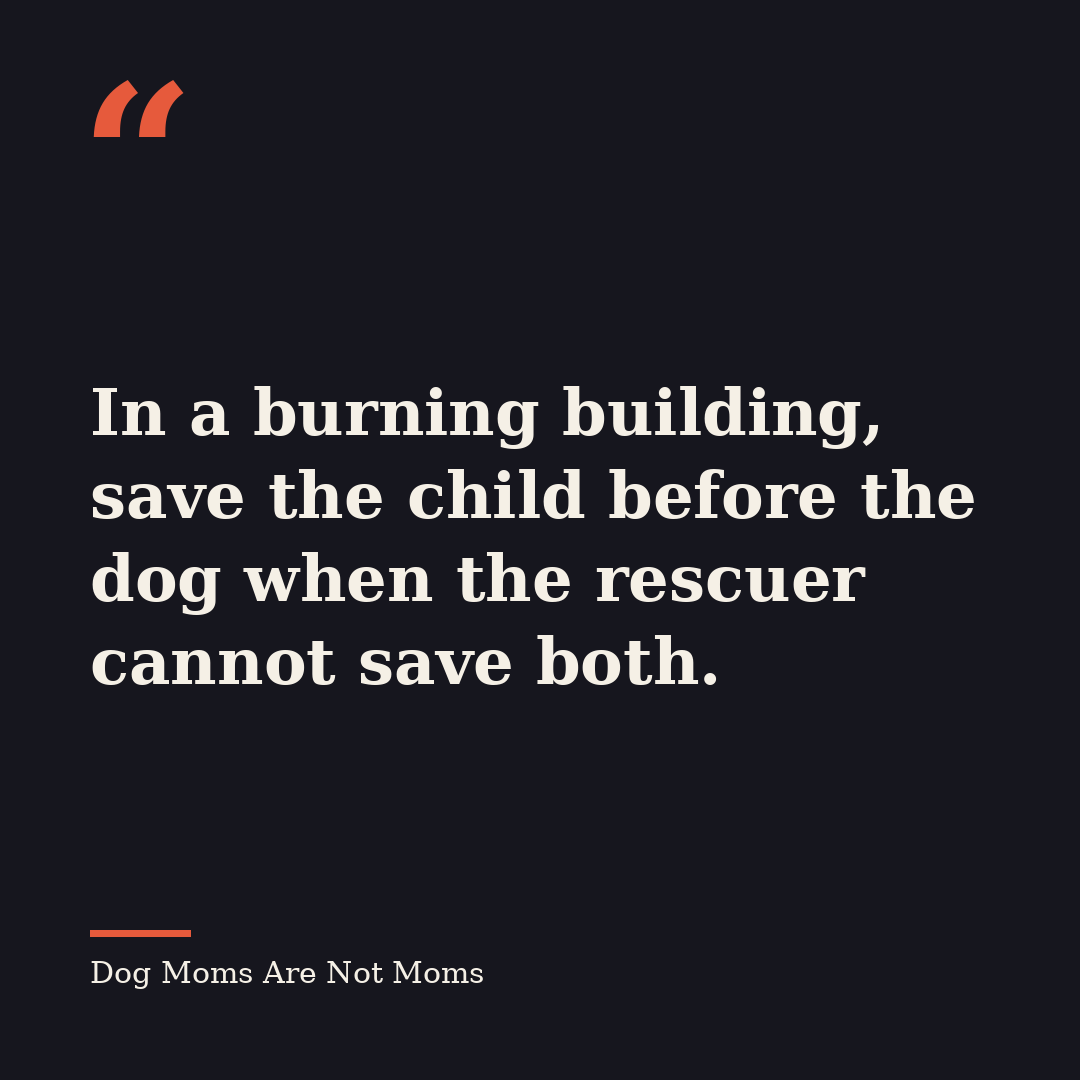
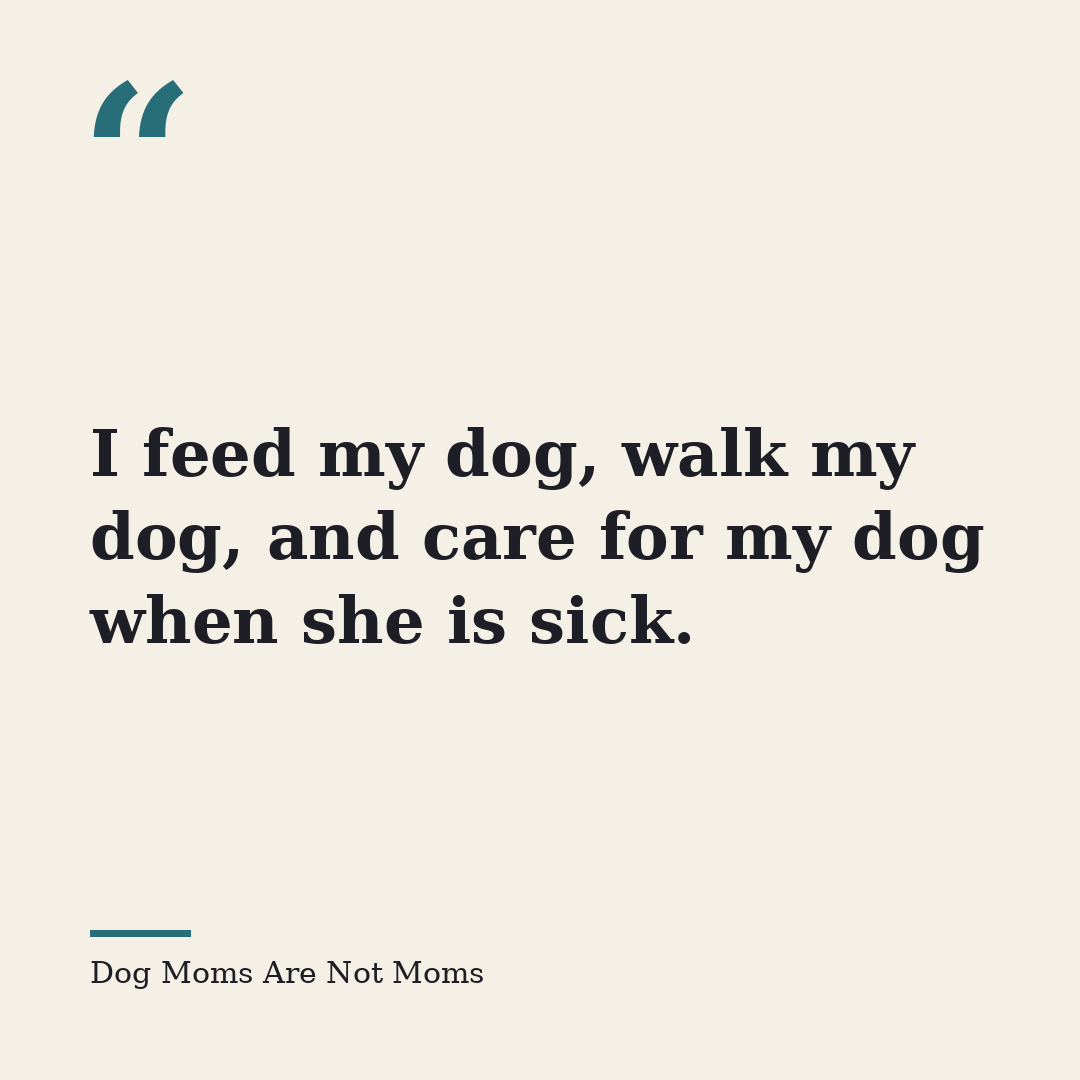
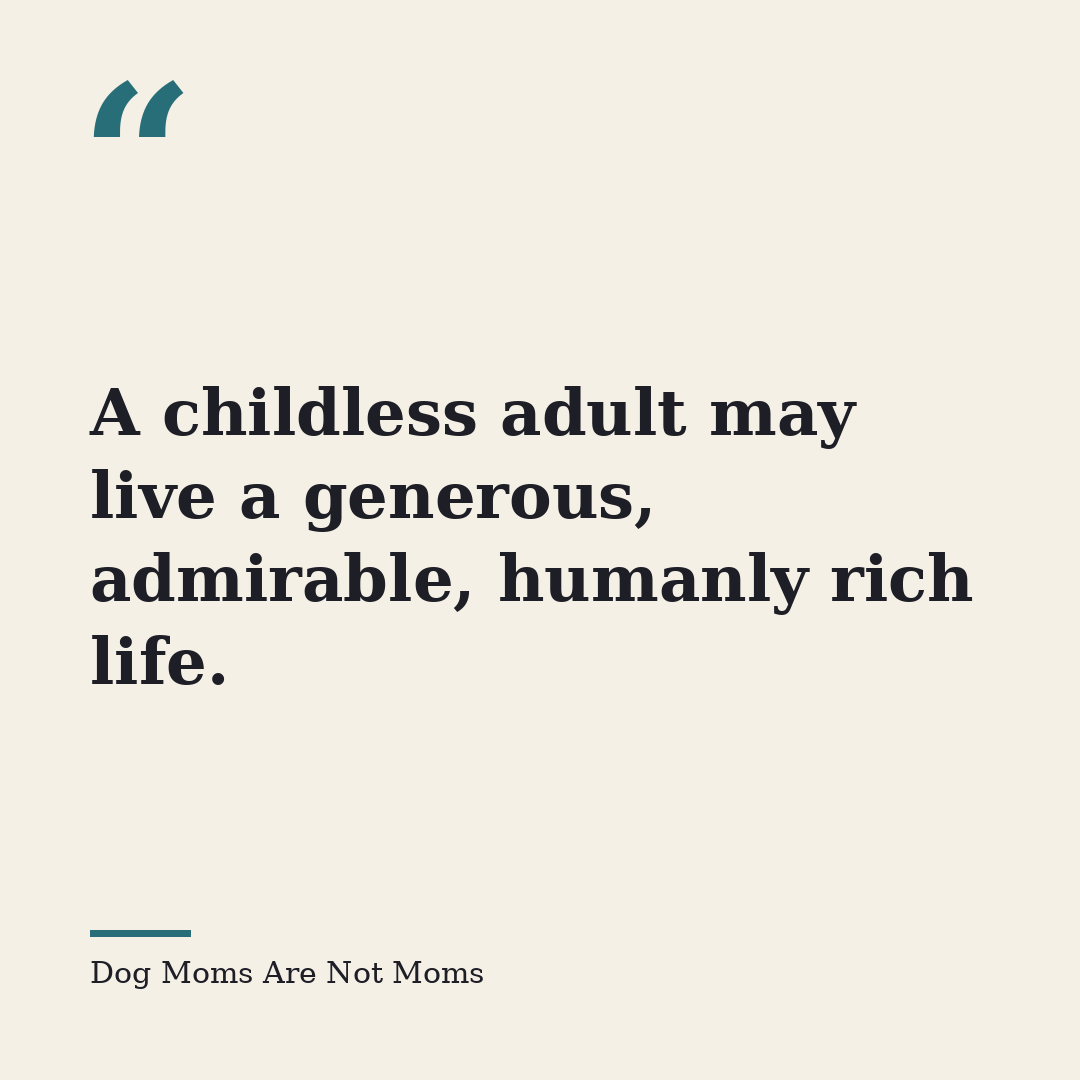
Every line is quoted word for word from the book.
Free to share with credit to Dog Moms Are Not Moms. Click any card for the full-size 1080×1080 image. Tip: pair a provocation card with a context card, so the conversation is about what the book really says.
Downloads
Reader discussion guide
Eight questions plus a closing prompt for book clubs, classrooms and interviews.
For reviewers & book clubs
Free review copies, with no obligation to review.
If you do review it, we’d welcome your honest opinion, critical ones included, wherever you normally post. Book clubs, podcasts and hosts are welcome too, and we’re happy to send the discussion guide.
- Email autumnsunpress.publicity@proton.me
- Tell us who you are, where you review or host (blog, podcast, Goodreads, club), and whether you prefer Kindle or paperback.
- We’ll reply with the options available.